Case Study
Case Study
EV Companion Application
EV Companion Application
Case Study
EV Companion Application
Role
UX/UI Design
User Research
Solo Project
Role
UX/UI Design
User Research
Solo Project
Tools
Figma Notion
Tools
Figma Notion
Duration
October 2023 - January 2024
Duration
October 2023 - January 2024
Introduction
With the Electric Vehicle (EV) market booming in India, and poised for even more growth in the coming years, it's clear that there's a big opportunity ahead. Many new manufacturers are entering the scene, but they're facing a challenge: how to make an app that truly fits their EVs and meets the needs of their customers. One solution could be to have a single app that works for all EVs. This way, early adopters wouldn't have to juggle multiple apps, and they'd get a better overall experience. It's about solving the problems they're facing now and making their EV ownership journey smoother.
Introduction
With the Electric Vehicle (EV) market booming in India, and poised for even more growth in the coming years, it's clear that there's a big opportunity ahead. Many new manufacturers are entering the scene, but they're facing a challenge: how to make an app that truly fits their EVs and meets the needs of their customers. One solution could be to have a single app that works for all EVs. This way, early adopters wouldn't have to juggle multiple apps, and they'd get a better overall experience. It's about solving the problems they're facing now and making their EV ownership journey smoother.
Approach
My approach to designing the EV application began with comprehensive secondary research, delving into existing literature, market trends, and competitor analysis to gain insights into the needs and challenges of EV owners. Leveraging these findings, I engaged in iterative ideation sessions to conceptualize features aimed at enhancing the EV ownership experience.
Approach
My approach to designing the EV application began with comprehensive secondary research, delving into existing literature, market trends, and competitor analysis to gain insights into the needs and challenges of EV owners. Leveraging these findings, I engaged in iterative ideation sessions to conceptualize features aimed at enhancing the EV ownership experience.
Problem Statement
How might we create a user-centric application that overcomes challenges in accessing relevant information, optimizing charging experiences, and seamlessly integrating electric vehicles into daily life?
Problem Statement
How might we create a user-centric application that overcomes challenges in accessing relevant information, optimizing charging experiences, and seamlessly integrating electric vehicles into daily life?
Research
In order to gather insights on Electric Vehicle (EV) app user behavior, conducting secondary research was crucial. This research involved analyzing existing data, reports, and studies related to the EV industry and user preferences. I also took a close look at existing EV apps to see what they're doing right and where they could improve. By comparing features and checking out the user experience of different apps, I got some great ideas and insights to guide my own design process
Research
In order to gather insights on Electric Vehicle (EV) app user behavior, conducting secondary research was crucial. This research involved analyzing existing data, reports, and studies related to the EV industry and user preferences. I also took a close look at existing EV apps to see what they're doing right and where they could improve. By comparing features and checking out the user experience of different apps, I got some great ideas and insights to guide my own design process
Research Findings
Rapid growth in the Indian electric vehicle market. India’s EV adoption is expected to grow at a compound annual growth rate of 49%, with 10 million EVs sold annually by 2030.
Increasing demand for user-friendly applications to enhance the EV ownership experience.
Challenges related to charging infrastructure and user awareness.
Research Findings
Rapid growth in the Indian electric vehicle market. India’s EV adoption is expected to grow at a compound annual growth rate of 49%, with 10 million EVs sold annually by 2030.
Increasing demand for user-friendly applications to enhance the EV ownership experience.
Challenges related to charging infrastructure and user awareness.
Ideation
Inspired by research insights, I generated ideas to address users' needs effectively. Key ideation points included:
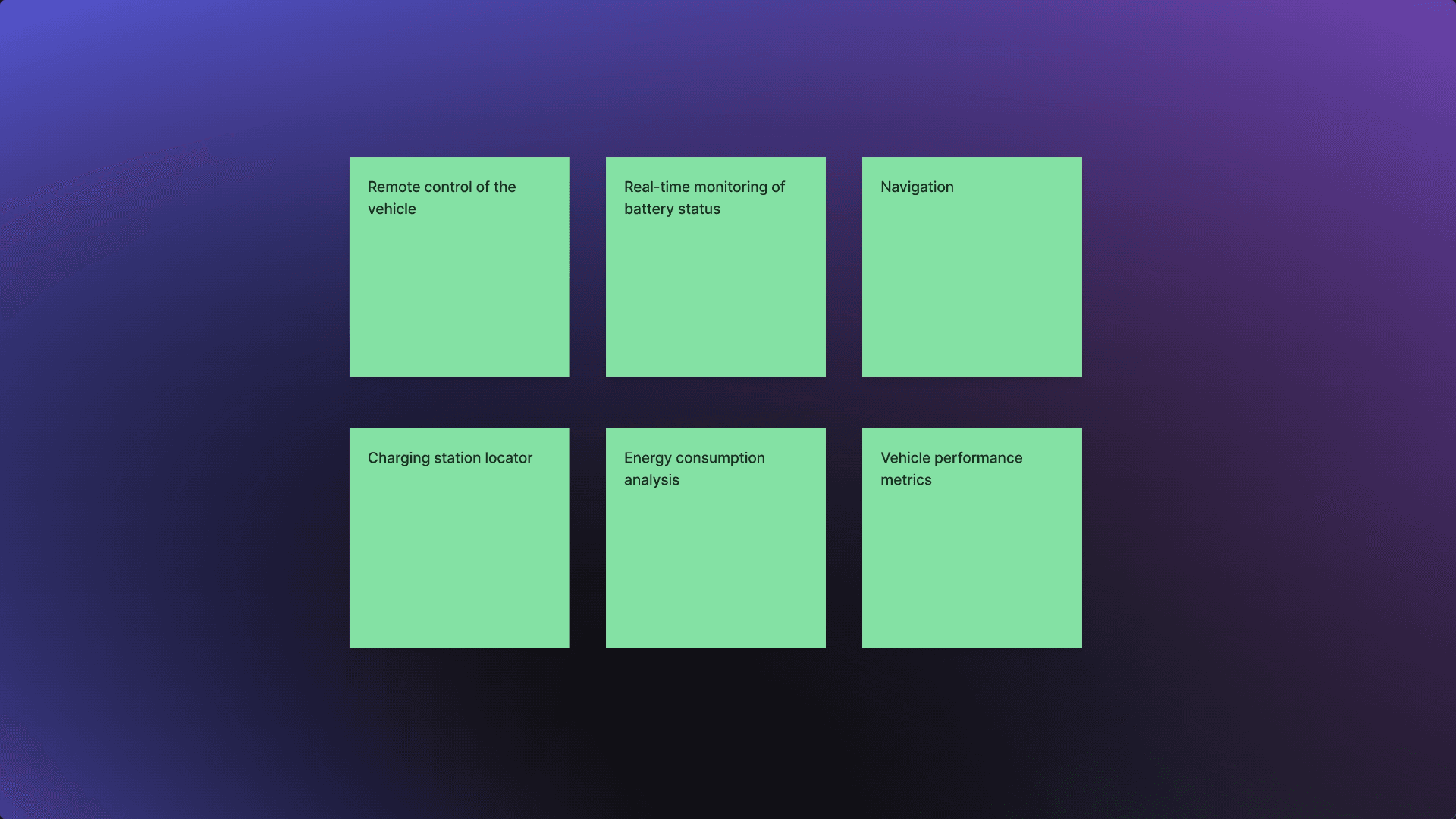
Charging Station Locator: An intuitive map interface displaying nearby charging stations with real-time availability and supported charging standards.
Route Planning: Integration of route planning functionality with charging station waypoints, considering factors like distance, traffic, and elevation to optimize EV range.
Vehicle Integration: Seamless integration with EV manufacturers' APIs to provide users with real-time battery status, range estimation, and charging progress.
Ideation
Inspired by research insights, I generated ideas to address users' needs effectively. Key ideation points included:
Charging Station Locator: An intuitive map interface displaying nearby charging stations with real-time availability and supported charging standards.
Route Planning: Integration of route planning functionality with charging station waypoints, considering factors like distance, traffic, and elevation to optimize EV range.
Vehicle Integration: Seamless integration with EV manufacturers' APIs to provide users with real-time battery status, range estimation, and charging progress.
Feature Mapping
Information Architecture
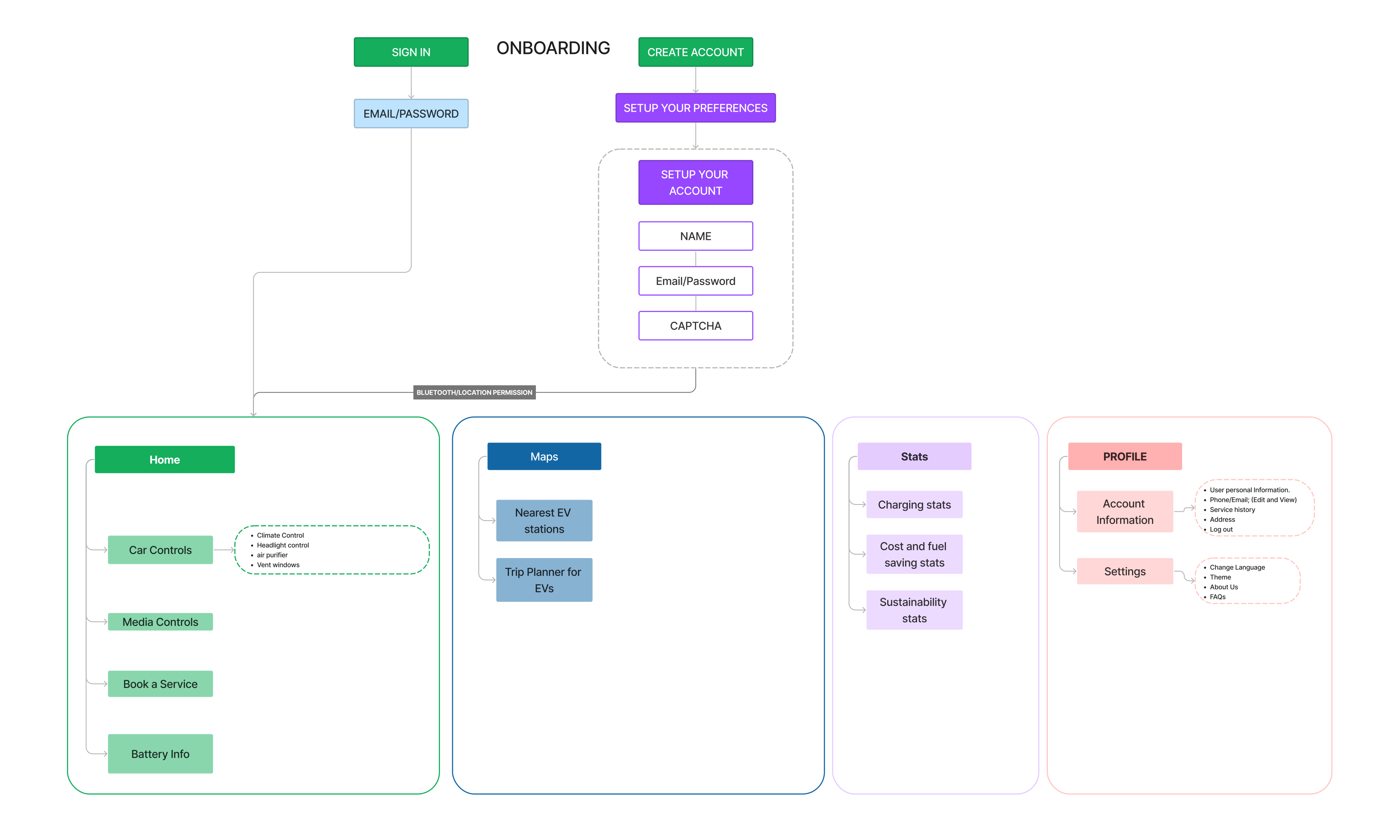
Designing the information architecture of the app was straightforward, as I aimed to prioritize usefulness over clutter. I wanted the app to offer valuable insights and seamlessly enhance the EV experience. I organized sections such as Home, Charging Stations, Route Planner, Vehicle Status, Settings, and Profile to ensure users could navigate effortlessly.
Information Architecture
Designing the information architecture of the app was straightforward, as I aimed to prioritize usefulness over clutter. I wanted the app to offer valuable insights and seamlessly enhance the EV experience. I organized sections such as Home, Charging Stations, Route Planner, Vehicle Status, Settings, and Profile to ensure users could navigate effortlessly.
Wireframes
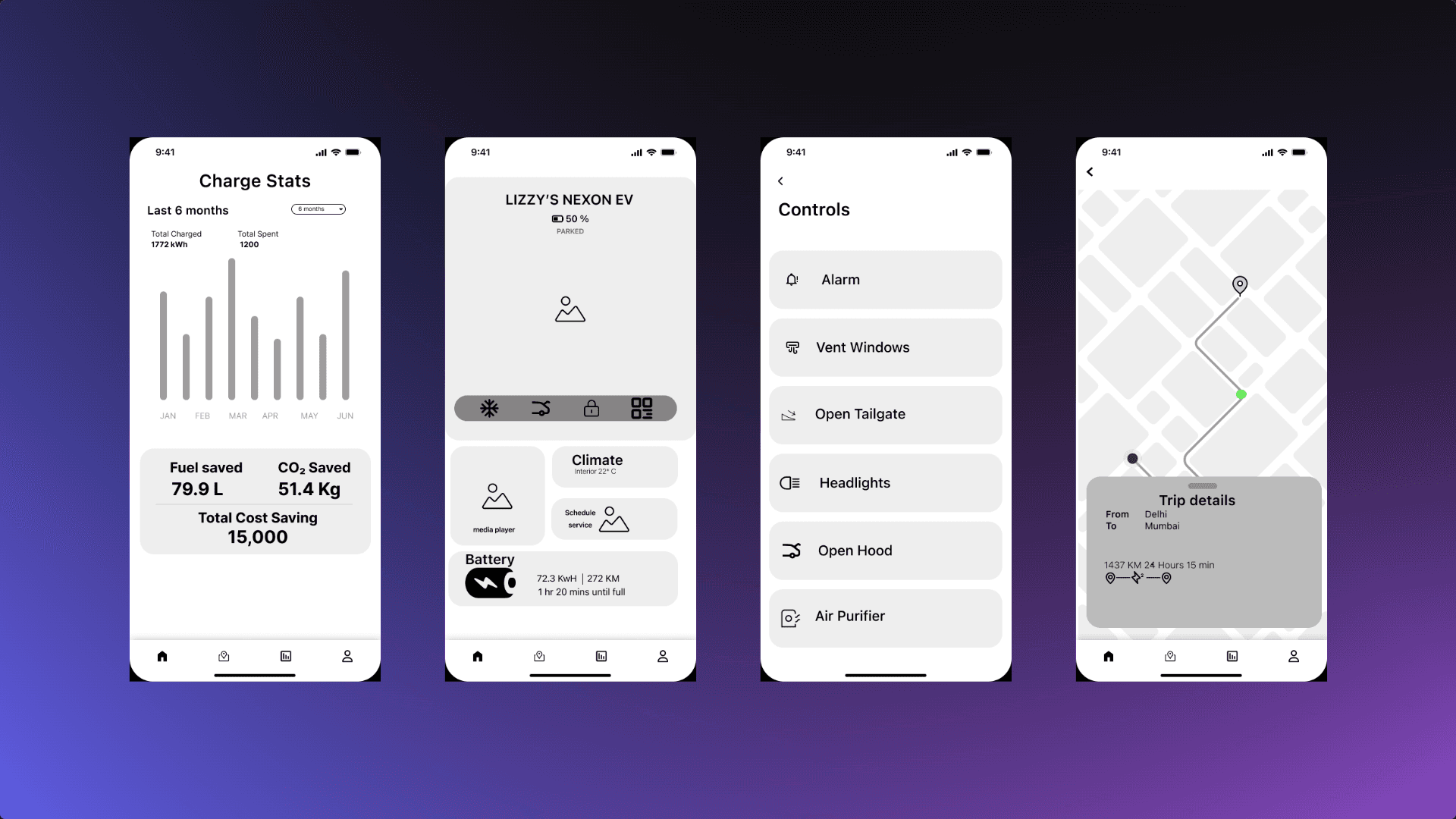
I focused on translating the conceptual ideas into tangible screens with clarity and functionality. This stage allowed me to refine the design and validate key functionalities before proceeding to the visual design phase.
Wireframes
I focused on translating the conceptual ideas into tangible screens with clarity and functionality. This stage allowed me to refine the design and validate key functionalities before proceeding to the visual design phase.
Visual Design
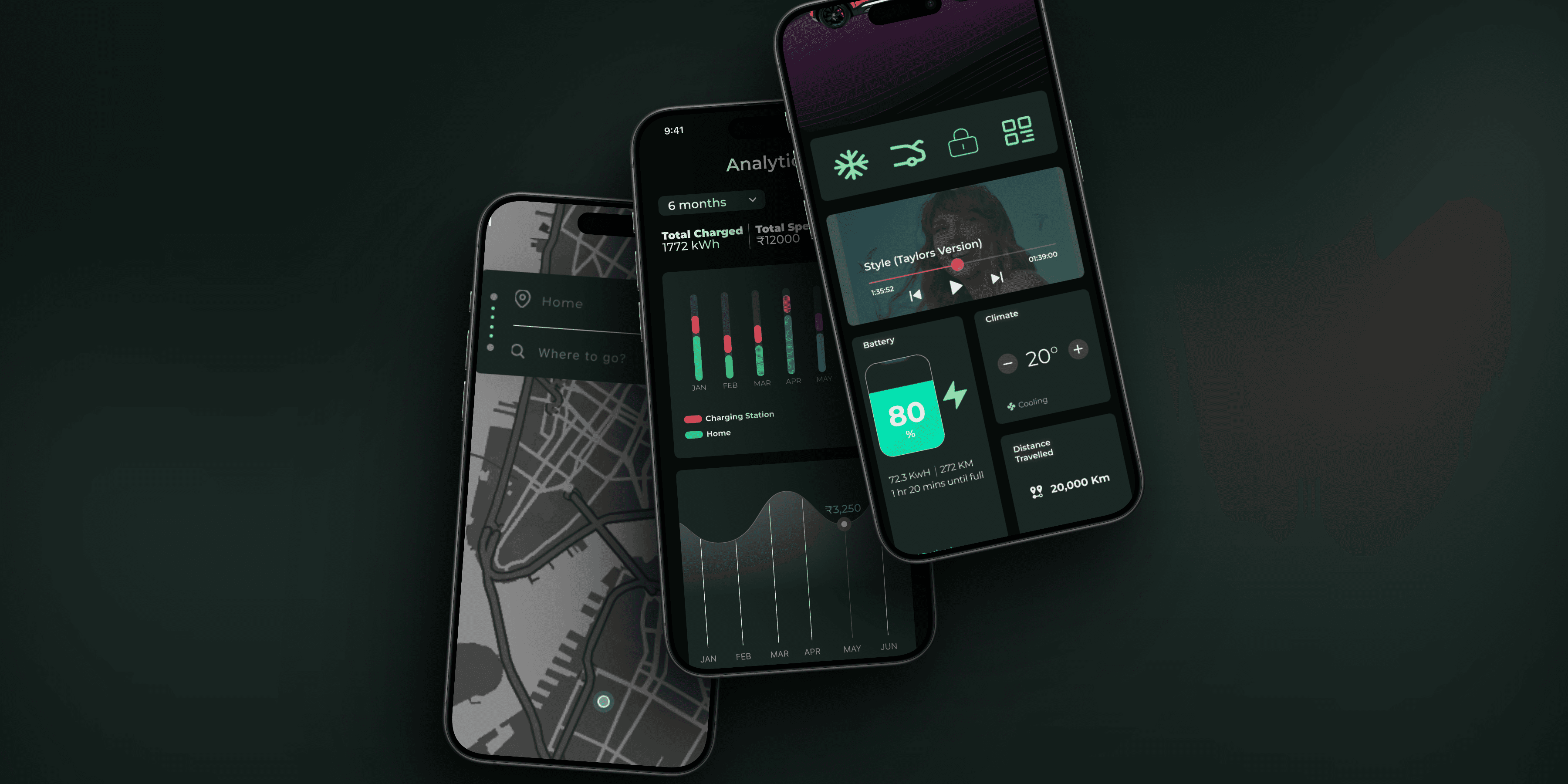
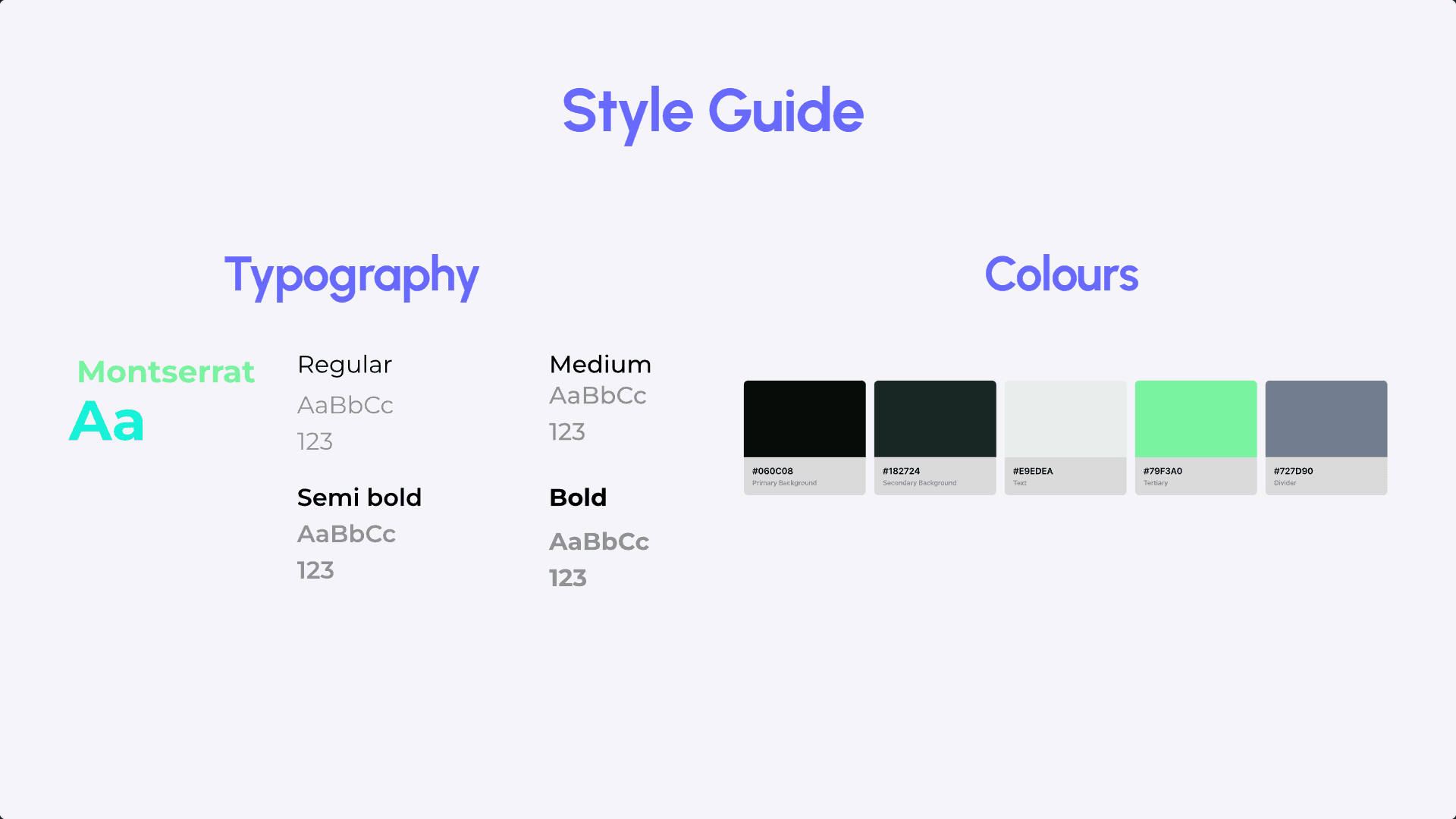
For the visual design, I aimed for a modern and minimalist aesthetic with a dark mode and bento grids which are industry standard. Simple design system which highlighted key actions and information, while clean typography and intuitive icons enhanced the overall look and feel of the application.
Visual Design
For the visual design, I aimed for a modern and minimalist aesthetic with a dark mode and bento grids which are industry standard. Simple design system which highlighted key actions and information, while clean typography and intuitive icons enhanced the overall look and feel of the application.
Iterations & Final Designs
Iterations & Final Designs
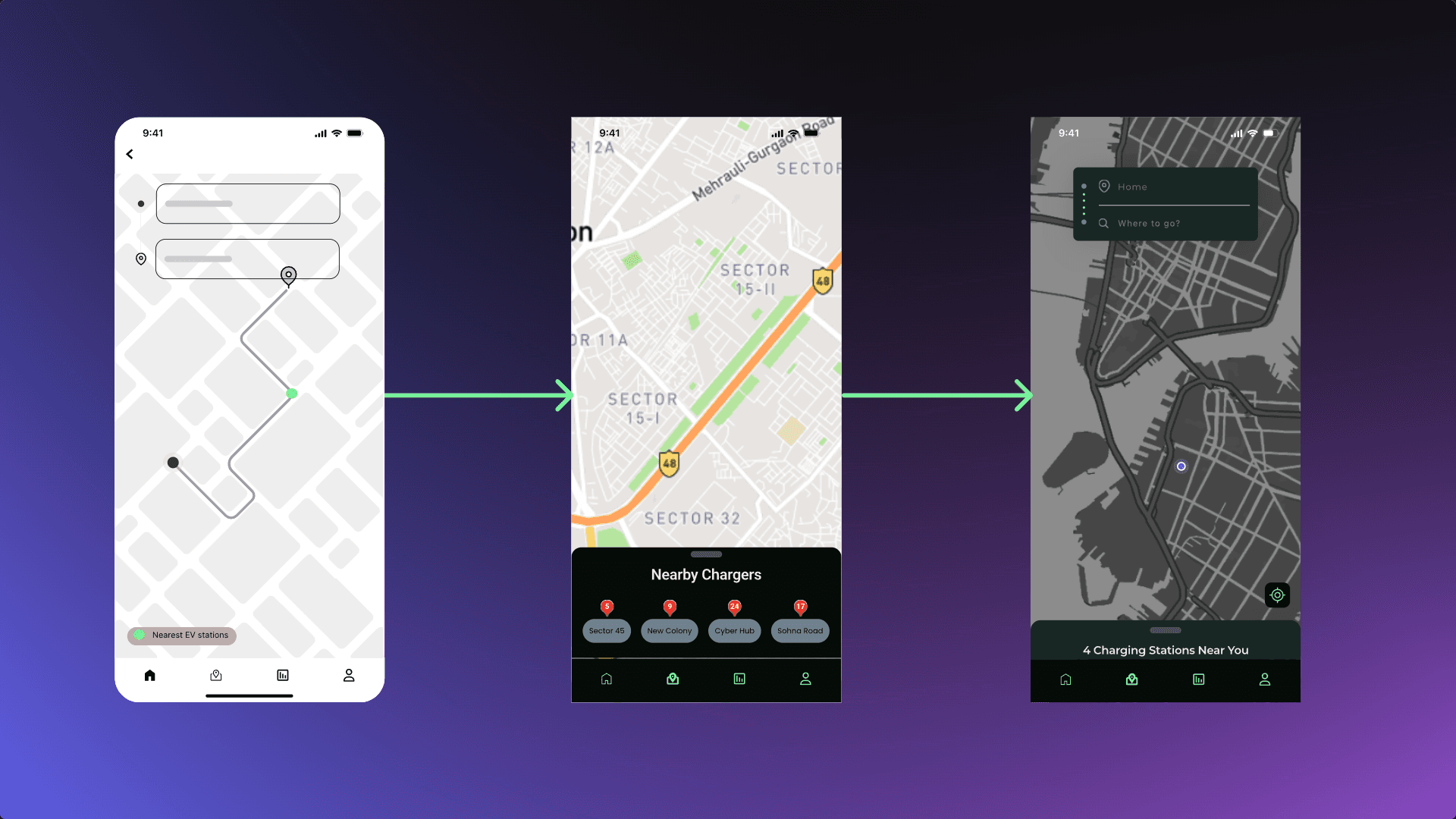
I underwent several iterations to arrive at the final design as exemplified here
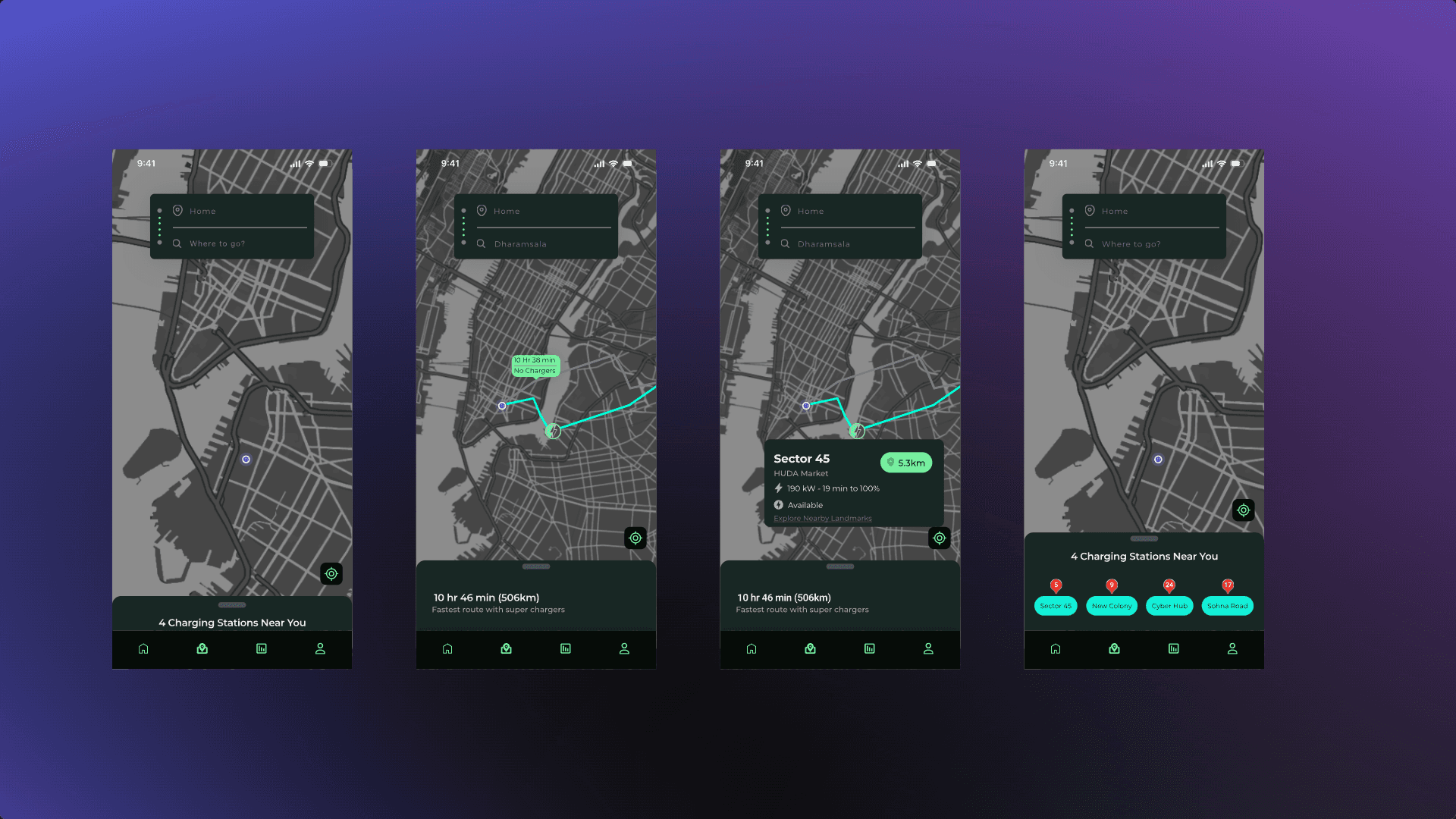
Final map screens where you can plan a trip and locate nearest EV Stations
Iterations & Final Designs
I underwent several iterations to arrive at the final design as exemplified here
Final map screens where you can plan a trip and locate nearest EV Stations
Prototype
Prototype
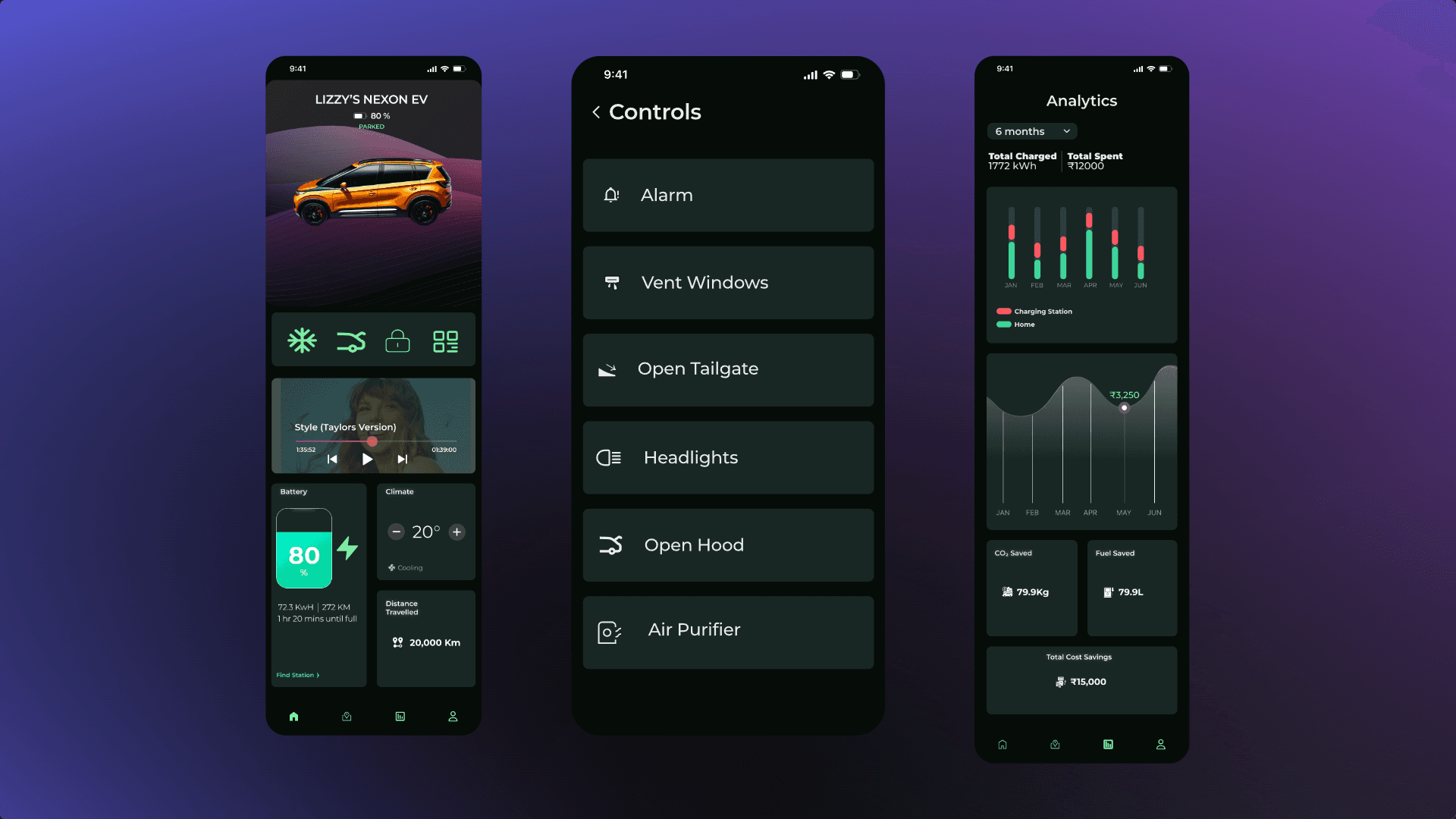
Home Screen, Controls & Analytics Dashboard
Home Screen, Controls & Analytics Dashboard
Key Learnings
Through the process of designing the Electric Vehicle (EV) application, several key learnings have emerged. Firstly, the importance of adaptability and resourcefulness in leveraging secondary research sources to gain insights in the absence of primary data. This experience has underscored the value of thorough exploration and analysis in informing design decisions. Additionally, the iterative nature of the design process has highlighted the significance of soliciting feedback and iterating on designs based on user insights. Looking ahead, the next steps involve conducting user testing to validate design assumptions and refine the application further.
Key Learnings
As I navigated through the process of designing the Electric Vehicle (EV) application, I discovered some invaluable insights. One of the most important lessons I learned was about the power of simplicity and prioritization in app design. By focusing on what truly matters and avoiding unnecessary clutter, I was able to create an experience that genuinely enhances the journey of owning an EV.
Key Learnings
As I navigated through the process of designing the Electric Vehicle (EV) application, I discovered some invaluable insights. One of the most important lessons I learned was about the power of simplicity and prioritization in app design. By focusing on what truly matters and avoiding unnecessary clutter, I was able to create an experience that genuinely enhances the journey of owning an EV.
Contact
Let's start creating together
Copy Email
Copied
Contact
Let's start creating together
Copy Email
Copied
Contact
Let's start creating together
Copy Email
Copied